
sixdan buying guide
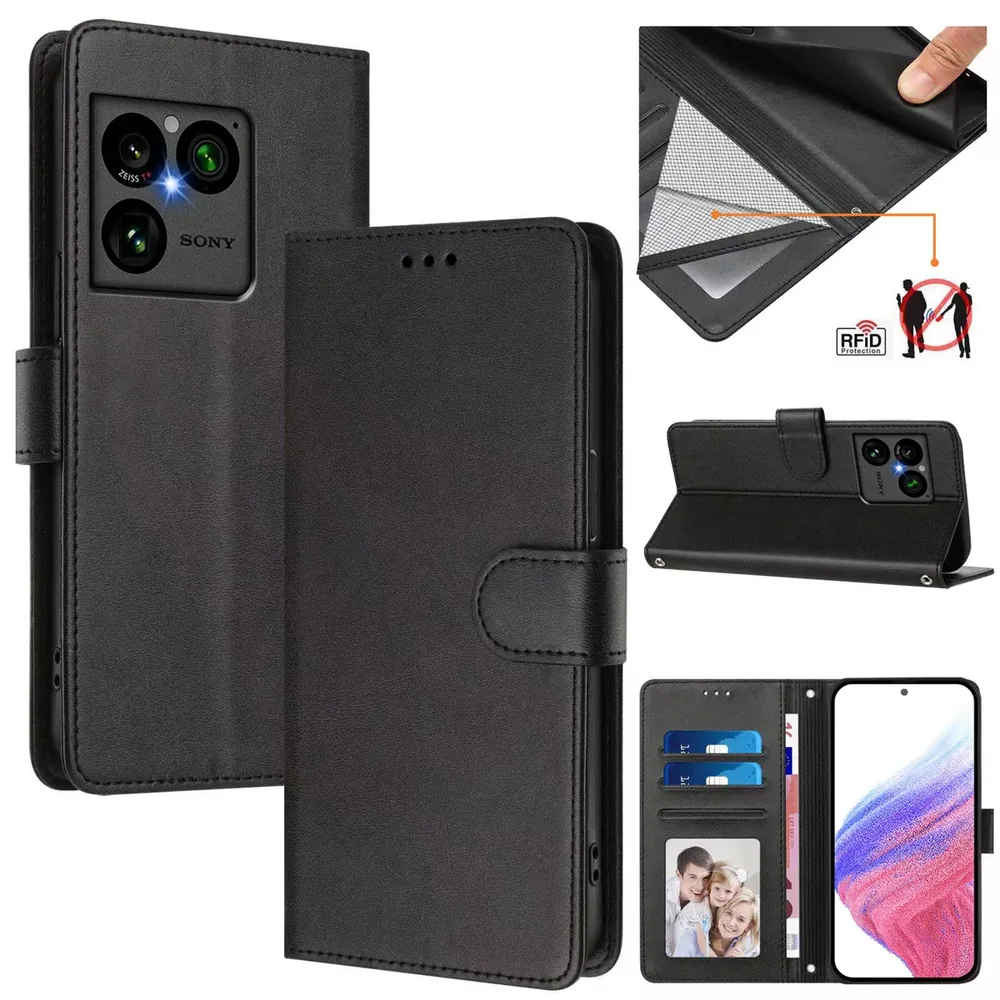
An RFID-blocking wallet phone case combines two everyday jobs: it protects your phone and carries contactless cards. The useful part is not the label alone. A good case needs a working shielding layer, secure card storage, the right phone fit, and a layout that suits how you charge and carry your device.
Quick answer
An RFID-blocking layer is designed to reduce radio-frequency communication with compatible contactless cards while those cards are inside the shielded section. It does not stop online fraud, protect a lost card, hide a magnetic stripe, or secure every card in every pocket. Treat RFID blocking as one practical feature in a well-designed wallet case, not as a complete financial-security solution.
What does RFID blocking mean in a phone case?
RFID stands for radio-frequency identification. Some contactless cards and travel documents contain a chip and antenna that communicate over a short-range radio field. Contactless payment systems use a related near-field technology: EMVCo explains that contactless cards and NFC-enabled devices communicate with a payment terminal without physical contact.
An RFID-blocking wallet normally adds a conductive layer around a card compartment. That layer is intended to weaken or interrupt the radio signal while the compartment is closed. The basic principle is electromagnetic shielding. NIST describes RF shielding as enclosing an area with conductive material to limit the propagation of radio-frequency signals.
The important phrase is while the card is inside the shielded section. A product may have several pockets, but only some may be lined. A card partly exposed above the lining may also behave differently from a fully enclosed card. This is why the construction of the wallet matters more than a printed RFID logo.
What an RFID-blocking wallet case can and cannot do
What it is designed to help with
- Reducing unintended short-range radio communication with a compatible card stored inside the shielded area.
- Keeping payment, transit, access, or travel cards organized in one closed compartment.
- Adding a physical layer between cards and the outside environment when the wallet is closed.
What it does not replace
- It does not protect against online account theft, phishing, weak passwords, or a compromised merchant.
- It does not prevent someone from using a card after the wallet or phone is physically lost.
- It does not protect cards stored outside the lined section or guarantee blocking at every frequency.
- It does not replace checking statements and reporting an unrecognized transaction quickly.
If a bank card is lost or you notice an unfamiliar charge, contact the issuer immediately. The U.S. Federal Trade Commission recommends reporting lost cards and unauthorized activity promptly and continuing to monitor the account. That practical response matters more than any accessory claim.
RFID, NFC, chip, and magnetic stripe: they are not the same thing
Wallet-case listings often group several technologies under the word “RFID,” so it helps to separate them:
| Card feature | How it is normally used | What an RFID lining changes |
|---|---|---|
| Contactless chip / NFC symbol | The card is tapped or held near a compatible reader. | A suitable shielding layer can reduce short-range radio communication while the card is enclosed. |
| Inserted EMV chip | The card is inserted into a terminal so the contacts can be read. | RF shielding does not change the physical contact chip. |
| Magnetic stripe | The stripe is swiped through a reader. | RFID lining is not the same as magnetic-stripe protection. |
| Phone NFC wallet | The phone uses NFC with software authentication. | A card pocket lining is not a substitute for the phone’s device security settings. |
Which wallet phone case design fits your routine?
The best wallet case is the one you will use comfortably every day. Start with how many cards you carry and whether you want the screen covered.
Flip wallet case
A flip wallet places the card slots inside a front cover. It usually provides the clearest separation between the cards and the outer surface, and the cover helps protect the phone screen from keys and other objects in a bag. The tradeoff is extra thickness, especially after several cards are added.
Detachable magnetic wallet
This style pairs a slim phone case with a removable card holder. It is convenient when you want the wallet during travel or commuting but prefer a lighter phone at home. Check whether the product uses a magnetic attachment, a mechanical lock, or both. Also confirm that the wallet can be removed before wireless charging if required.
Back card-pocket case
A rear pocket keeps the front of the phone open and is usually slimmer than a folio. It works best for one or two cards. Because the pocket is exposed, look for a firm closure, elastic retention, or a flap that prevents cards from sliding out.
Zipper wallet and crossbody case
A zipper or crossbody design can carry more cards, folded cash, and small essentials. It is useful for travel, events, or quick errands, but it is closer to a compact purse than a slim phone case. Pay attention to strap attachment points, zipper clearance, and how the weight feels when worn.
Seven features to check before buying
- Exact phone model. Match the complete model name, including Pro, Pro Max, Plus, Ultra, Fold, Flip, Air, FE, or 5G. Camera openings and button positions can change even when two phones have similar names. Use our phone case fit guide if you are unsure.
- Shielded pocket location. The listing should explain which compartment is RFID blocking. Do not assume every slot, outer pocket, or detachable section has the same lining.
- Realistic card capacity. A slot labeled for three cards may feel tight with three embossed cards. If you carry several cards, choose a gusseted wallet or zipper style rather than overfilling a slim pocket.
- Card retention. Look for a snap, zipper, magnetic flap, elastic band, or close-fitting slot. RFID blocking is not useful if the card can fall out.
- Phone protection. Raised camera edges, covered corners, a stable inner shell, and usable side buttons still matter. A wallet should not compromise the case’s main job.
- Stand and strap design. If the cover folds into a stand, check that it supports your preferred viewing angle. For lanyards, inspect the anchor position and use the strap for carrying convenience rather than assuming it makes the phone drop-proof.
- Material and care. PU leather is easy to wipe and offers consistent color. Fabric and textured finishes can add grip. Genuine leather develops wear and patina. Rhinestone or decorated wallets need gentler handling.
Do not overfill the wallet
Overfilling stretches slots, puts pressure on the phone screen, weakens closures, and makes the case harder to hold. Carry the smallest practical set of cards and keep coins or hard objects away from the display.
RFID wallet cases, wireless charging, and magnetic accessories
Wireless charging and card storage can compete for the same space on the back of a phone. A thick wallet, metal shielding layer, cards, magnetic plate, or ring stand may interrupt alignment or increase the distance between the phone and charger.
If wireless charging matters to you, choose one of these approaches:
- Detachable wallet: remove the card section before charging.
- Clearly specified magnetic case: use a case designed for compatible magnetic accessories and follow the product instructions.
- Wired charging: a practical option for thicker folio or zipper cases.
Do not place payment cards between a phone and a wireless charger. Remove cards before charging unless the card issuer and accessory manufacturer explicitly state otherwise. If magnetic charging is your priority, compare our magnetic and MagSafe-style cases with a wallet design before ordering.
How to match the case to your phone brand
Wallet functions are similar across brands, but the physical case is always model-specific. Start with your phone category, then filter by model and wallet style:
- Apple iPhone cases for standard, Air, Pro, Pro Max, Plus, and related models.
- Samsung Galaxy cases, including S-series and foldable devices.
- Google Pixel cases with model-specific camera-bar clearance.
- Huawei phone cases for Nova, Mate, Pura, and foldable series.
For foldable phones, confirm whether the wallet attaches to one half of the case and whether it affects hinge movement. For large camera modules, make sure the card flap or stand cannot cover the lenses when opened.
How to care for an RFID-blocking wallet case
- Remove cards before cleaning and use a soft, slightly damp cloth.
- Avoid soaking the case or using bleach, alcohol-heavy cleaners, or abrasive pads unless the manufacturer specifically permits them.
- Keep sand and debris out of the inner shell because trapped particles can scratch the phone.
- Check straps, snaps, card slots, and detachable joints regularly for stretching or damage.
- Replace the case if the phone no longer fits firmly or if cards can slide out without resistance.
A practical buying checklist
Before adding an RFID wallet phone case to your cart, confirm all eight points:
- The product title names your exact phone model.
- The RFID-blocking compartment is clearly identified.
- The stated card capacity matches what you actually carry.
- Cards have a secure closure or firm retention system.
- The camera, ports, speakers, and buttons remain accessible.
- The charging method works with the wallet attached or the wallet is removable.
- The stand or strap supports your intended use.
- You have reviewed the store’s shipping and returns information.
Frequently asked questions
Do RFID-blocking wallet phone cases block all card signals?
No universal wallet can promise to block every card, frequency, pocket position, or reader. The lining is intended to reduce radio communication for compatible cards that are fully enclosed in the shielded section.
Can I keep my contactless card next to my phone?
You can store a card in a properly designed wallet case, but remove cards before wireless charging and avoid placing a card directly between the phone and charger. Follow the card issuer’s and charger manufacturer’s guidance.
Will an RFID wallet damage my phone’s NFC?
A card-pocket shielding layer does not normally change the phone itself, but its position may affect radio or charging performance while the wallet is attached. A detachable wallet is the simplest choice when you use phone NFC or wireless charging frequently.
Is a wallet case safer than carrying cards loose?
It can keep cards organized and add a secure closure, but safety depends on the design and how you use it. A lost phone-wallet can expose both the phone and cards at once, so use device locking and report a lost card promptly.
How many cards should I carry in a phone case?
Use the stated capacity and avoid forcing extra cards into a slot. One to three cards is common for slim wallets; zipper and gusseted styles are better for larger sets.
Should I choose a flip wallet or a detachable wallet?
Choose a flip wallet for screen coverage and an all-in-one layout. Choose a detachable wallet if you want easier wireless charging or prefer to remove the card holder at home.
Choose by fit, then by function
Explore wallet phone cases
Start with your exact phone model, then compare card capacity, closure, charging compatibility, stand design, and strap options.
Shop wallet cases Browse flip wallet leather cases
Need help matching a model? Contact sixdan support. You can also read our comparison of wallet cases and regular cases.